The Book That Wakes Us Up

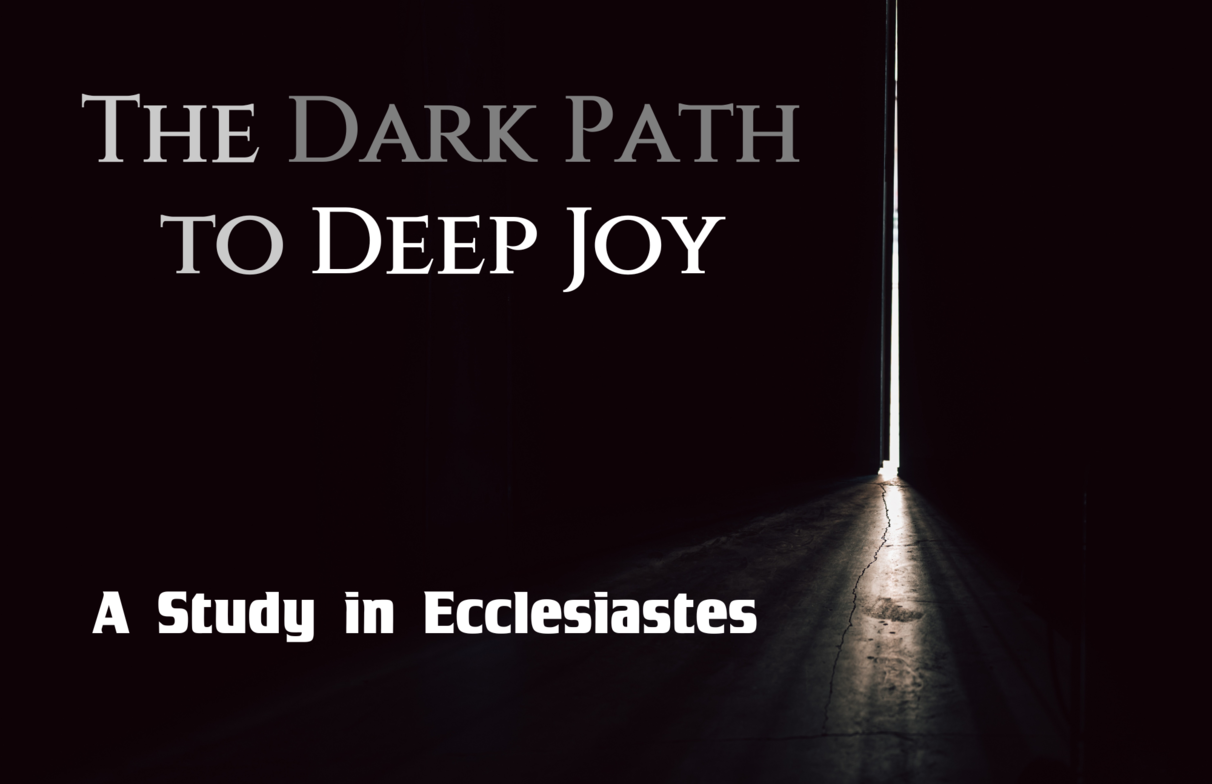
Have you ever read a book that felt like a punch to the gut? One that shook you to your core and made you question everything you thought you knew? The book of Ecclesiastes in the Bible is exactly that kind of read. It's not your typical feel-good spiritual text. Instead, it comes at us like a bully on a playground, kicking sand in our faces and popping all our balloons of false hope.
"Vanity of vanities, all is vanity!" (Ecclesiastes 1:2)
"The wise dies just like the fool." (Ecclesiastes 2:16)
"Man has no advantage over the beasts, for all is vanity." (Ecclesiastes 3:19)
These aren't exactly the uplifting messages we're used to hearing in church. So why should we bother with such a seemingly depressing book? Because Ecclesiastes offers us something rare and precious: the truth about life "under the sun" and the path to finding deep, lasting joy.
Ecclesiastes is part of the Bible's wisdom literature, alongside books like Proverbs and Job. While Proverbs gives us general rules for living, Ecclesiastes focuses on the exceptions – the times when life doesn't make sense, when the good suffer and the wicked prosper. It's a necessary counterbalance, teaching us to navigate the complexities and contradictions of the real world.
The book's central message revolves around the Hebrew word "hevel," often translated as "vanity." But "hevel" is more accurately understood as "vapor" or "breath." Try this: exhale and then try to grab onto your breath. You can't, because it's there for a split second and then gone. That's what the author of Ecclesiastes is getting at – the fleeting, uncontrollable nature of life "under the sun."
The phrase "under the sun" is also key to understanding Ecclesiastes. It appears 29 times in the book and nowhere else in the Bible. It sets the boundaries for the author's observations. When he says "all is vanity," he's talking about life from a purely earthly perspective, divorced from the eternal. Without God in the picture, everything becomes meaningless and absurd.
This might sound depressing, but there's profound wisdom here. Ecclesiastes takes us on a dark journey, confronting the emptiness of life without God, so that we can discover the deep joy only He can provide. It's like looking at the back of a tapestry – all we see are tangled threads and knots. But when we turn it over, trusting in God's bigger picture, we start to see the beautiful design.
The book systematically dismantles all the things we typically chase for fulfillment:
- Wisdom and knowledge (Ecclesiastes 1:16-18)
- Pleasure and entertainment (Ecclesiastes 2:1-11)
- Work and achievements (Ecclesiastes 2:18-23)
- Wealth and possessions (Ecclesiastes 5:10-15)
- Even religion, when divorced from a genuine relationship with God (Ecclesiastes 5:1-7)
None of these things, pursued for their own sake, can ultimately satisfy the human heart. They're all "hevel" – vapor that slips through our fingers.
So what's the point? Is Ecclesiastes just an ancient version of nihilism? Far from it. The book is actually guiding us towards true wisdom and joy. It's teaching us to:
1. Embrace reality: Stop chasing illusions and face life as it really is, with all its complexity and mystery.
2. Find contentment in simple pleasures: Enjoy your food, your work, and your relationships as gifts from God (Ecclesiastes 2:24-25, 9:7-10).
3. Fear God and keep His commandments: This is the ultimate conclusion of the book (Ecclesiastes 12:13-14). True wisdom begins with a proper relationship with our Creator.
4. Live in light of eternity: While focusing solely on what's "under the sun" leads to despair, remembering there's a God "above the sun" gives meaning to our temporary existence.
But here's where the Christian understanding of Ecclesiastes takes an incredible turn. We can read this ancient wisdom through the lens of the Gospel, and suddenly, everything changes.
Jesus Christ, the eternal Son of God, willingly subjected Himself to life "under the sun." He experienced all the vanity, injustice, and absurdity that Ecclesiastes describes. He toiled, He suffered, He even died under the sun. But in doing so, He redeemed us from the curse of meaninglessness.
Through His resurrection, Jesus restored purpose to our toil. His return promises to right every wrong and make sense of every absurdity. In Christ, we find the ultimate answer to the book's desperate cry for meaning.
This transforms how we read Ecclesiastes. Yes, life is often confusing and painful. Yes, our accomplishments and pleasures are fleeting. But because of Jesus, we can face these realities with hope and even joy. We're no longer trapped "under the sun" but are connected to the eternal God who exists beyond it.
Ecclesiastes invites us to take a hard, honest look at life. It splashes cold water on our face, waking us from the illusions of materialism and shallow spirituality. But it does this so we can embrace something far greater – a life lived in relationship with the God who gives ultimate meaning.
As you reflect on the message of Ecclesiastes, consider:
- What temporary things are you chasing for fulfillment?
- How can embracing life's complexity actually deepen your faith?
- In what ways does Jesus' life, death, and resurrection answer the book's cry for meaning?
- How might your daily choices change if you truly lived in light of eternity?
Ecclesiastes isn't an easy read, but it's a necessary one. It's the axe that breaks up the frozen sea within us, clearing the way for deeper joy and truer wisdom. May we have the courage to walk its dark path, trusting that it leads to the light of God's presence and the fullness of life in Christ.
-
Poquoson Baptist Church
Contact
Office Hours
.png)